
The Truth Behind Indian Football World Cup Qualification
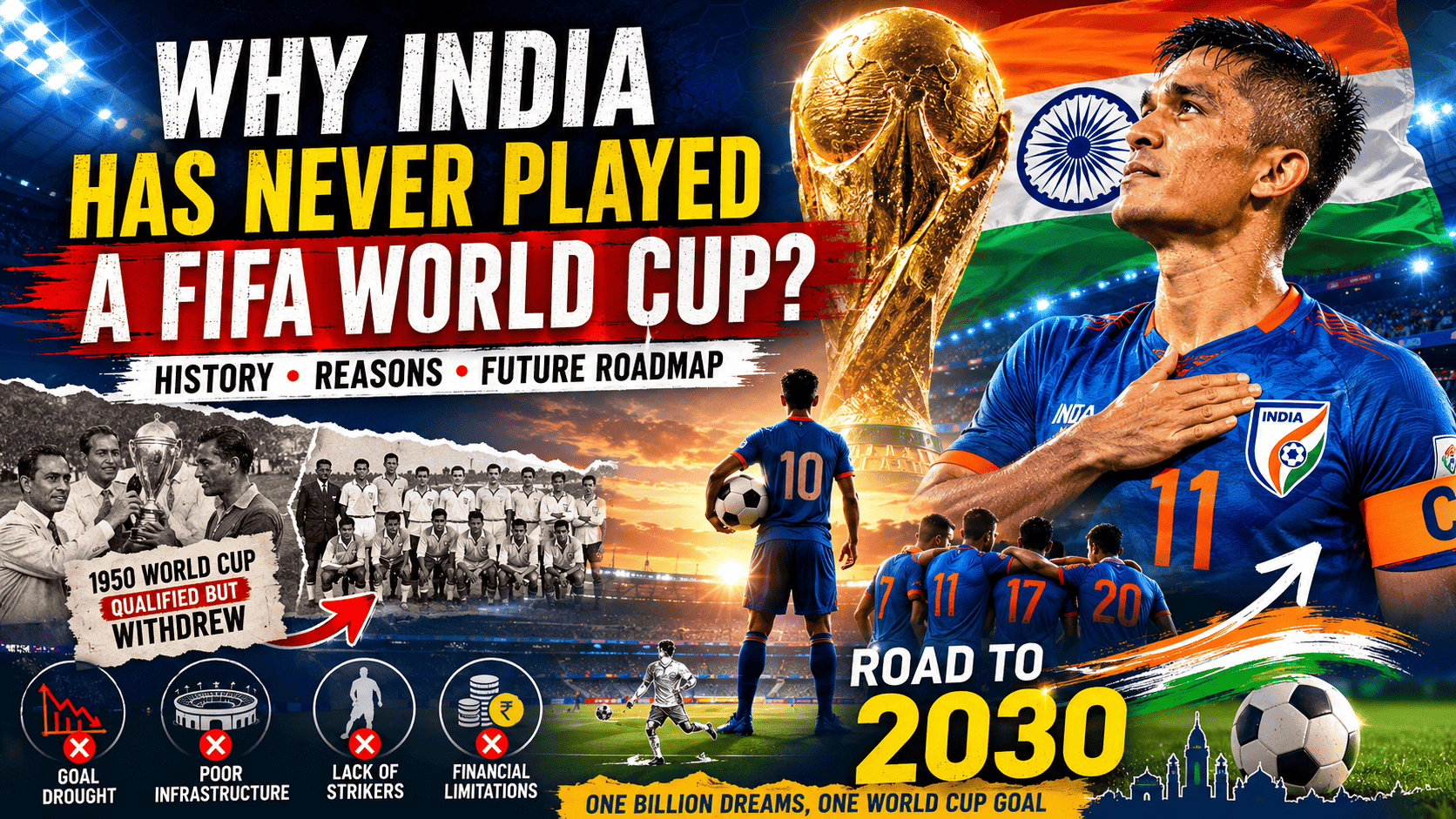
India has never played a match in the FIFA World Cup. While the national team qualified by default in 1950 after all other teams in their Asian group withdrew, administrative, financial, and logistical challenges forced them to pull out before the tournament started.
For decades, fans have wondered why a nation of over a billion people struggles to reach the global stage. Achieving Indian football World Cup qualification remains a difficult goal, but looking closely at the history and current structural issues shows exactly what needs to change.
Why Did India Withdraw from the 1950 World Cup?
There is a famous myth that FIFA banned India because the players refused to wear boots and wanted to play barefoot. The real truth is much more about money and planning.
The All India Football Federation prioritized the Olympic Games over the World Cup back then. When you combine that with massive travel costs to Brazil and very little preparation time, the federation simply decided to skip the trip.
When Was the Golden Era of Indian Football?
The national team enjoyed its finest moments between 1951 and 1962. Under the guidance of legendary coach Syed Abdul Rahim, India became a dominant force in Asian football.
The team won gold medals at both the 1951 and 1962 Asian Games. They also secured a historic fourth-place finish at the 1956 Melbourne Olympics. Greats like PK Banerjee and Chuni Goswami defined this incredible generation, proving that the talent has always been there.
What Happened in the 2026 FIFA World Cup Qualifiers?
India was officially eliminated from the 2026 FIFA World Cup qualifiers in June 2024 after finishing third in their second-round group behind Qatar and Kuwait. Even though the World Cup expanded to 48 teams, the squad could not capitalize on the extra Asian slots.
To be honest, a major goal-scoring drought and dropped points against lower-ranked teams like Afghanistan doomed the campaign. The Sunil Chhetri retirement impact also loomed large, leaving a massive leadership and attacking vacuum in the squad that younger players are still trying to fill.
How Does the Domestic League Impact the National Team?
The launch of the Indian Super League in 2014 brought massive corporate investment, better stadium infrastructure, and improved player fitness standards. However, the ISL impact on Indian football is a bit of a double-edged sword.
Here is the thing: most clubs rely heavily on foreign players for crucial attacking positions like center-forward. Because local talent gets pushed to the wings or defensive midfield roles, the national team severely lacks clinical, experienced goal scorers when playing international matches.
What Structural Changes Are Needed for the Future?
To bridge the gap with elite Asian teams, India must completely fix its development pipeline from the ground up.
Establish a robust nationwide youth league system that tracks talent before age 10.
Mandate minimum playing time for domestic forwards in club football.
Upgrade regional training pitches and increase coach education standards.
Consider government policy shifts to allow Persons of Indian Origin to represent the country.
The federation launched a long-term roadmap called Vision 2047 AIFF. This strategic plan aims to modernize infrastructure and scouting to place India among the top four football nations in Asia by the centenary of independence.
When Will the 2030 World Cup Qualifiers Begin?
The next qualification cycle is projected to start in late 2026 or early 2027. The coaching staff plans to use upcoming international friendlies to test younger prospects like Vibin Mohanan and Parthib Gogoi. For now, the immediate focus is securing a spot in the 2027 AFC Asian Cup.
Frequently Asked Questions
Did India ever play in a FIFA World Cup?
No, India has never played an official match in a FIFA World Cup, despite qualifying by default for the 1950 tournament in Brazil.
Why did Sunil Chhetri retire?
The legendary captain retired from international football in mid-2024 to allow a new generation of players to step up and share the goal-scoring burden.
What is Vision 2047 in Indian football?
It is a comprehensive strategic roadmap by the AIFF designed to completely overhaul grassroots scouting, refereeing, and infrastructure by the year 2047.
Can overseas citizens play for the Indian football team?
Currently, Indian sports policy does not permit dual citizenship, meaning Persons of Indian Origin cannot play unless they hold a valid Indian passport.
What is India's highest ever FIFA ranking?
India reached its peak FIFA ranking of 94 back in 1996, following a period of strong regional performances and administrative stability.
Have a story idea, tip, or ask us for any project?
Submit your insights, real estate queries, story ideas, or project inquiries directly to our editorial team using our quick submission form.
Submit Your InquiryLooking for tailored advice?
Get in touch with our experts. We're here to help you navigate your queries and provide the best solutions.